
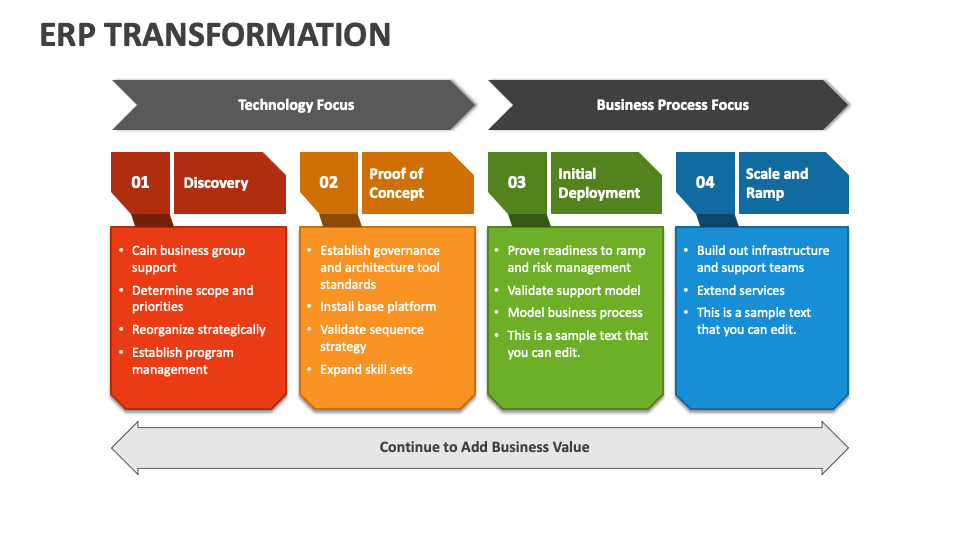
Treat ERP as the system of record, not your experience layer. Begin with a baseline assessment: custom code inventory, integration map, data quality (masters, duplicates), and close processes (OTC, P2P, R2R). Decide your path—SAP S/4HANA (on RISE) or Oracle Fusion—then phase the move using a strangler pattern: stabilize interfaces, carve out non-core features to microservices, and retire brittle customizations.
Clean data before you migrate. Master data governance (golden IDs, survivorship rules), reference data catalogs, and automated validations will save millions later.
Clean data before you migrate. Master data governance (golden IDs, survivorship rules), reference data catalogs, and automated validations will save millions later. For interfaces, move to event-driven patterns (Kafka) with idempotent consumers; avoid point-to-point spaghetti. Use BTP/OIC for sanctioned extensions, CI/CD for transports, and automated regression suites so month-end doesn’t become a war room.

Target benefits you can measure: cycle-time reductions, lower days sales outstanding, inventory turns, and a decrease in manual journal entries. Stand up an integration observability hub to spot failed IDocs/ICS flows in minutes. With a composable approach—clean core ERP + API platform + micro frontends—you upgrade faster, audit easier, and keep the business running while you modernize.